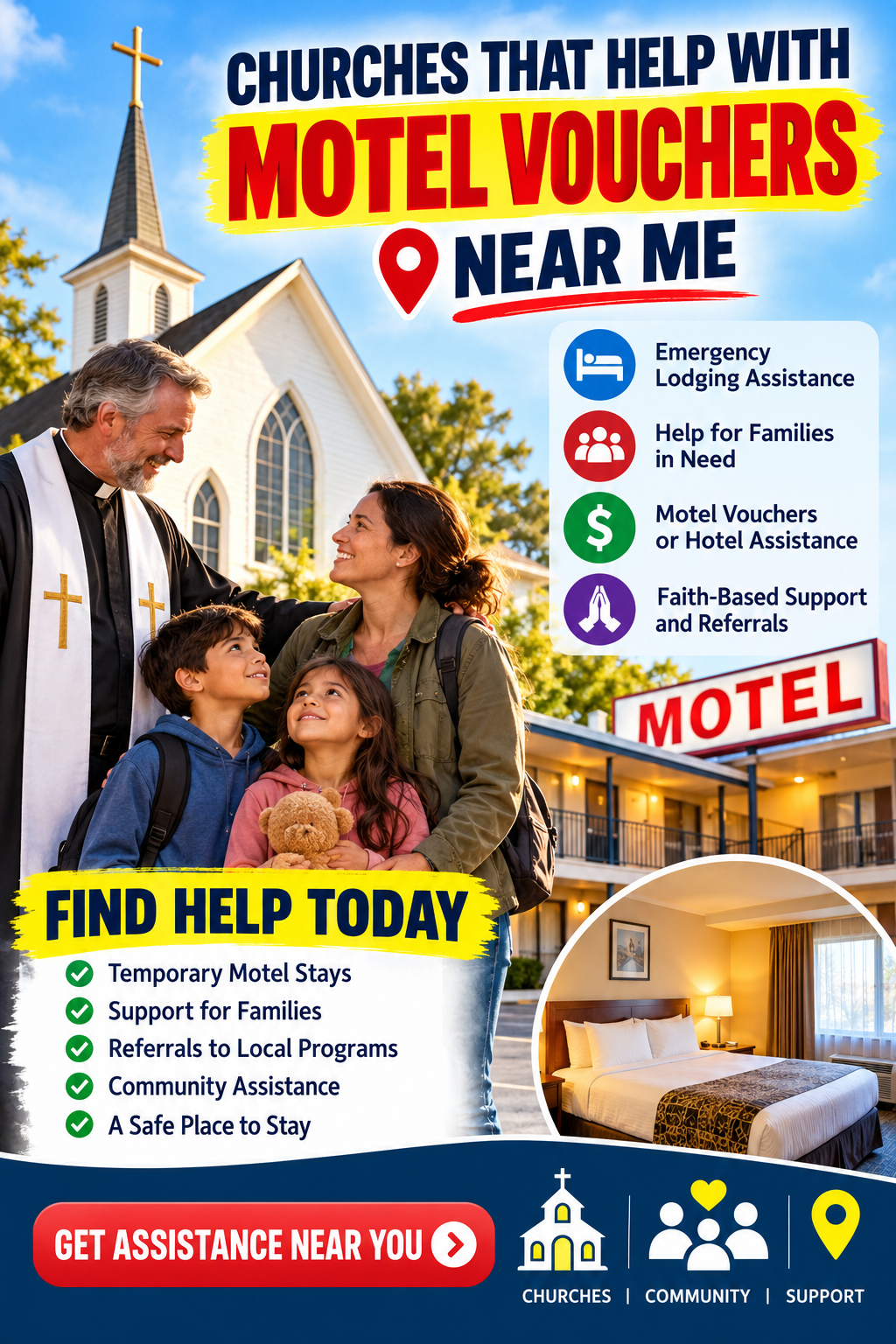
Finding a safe place to sleep can be stressful when money is tight, you have lost your housing, or an unexpected emergency leaves you without somewhere to stay.
In these situations, churches and faith-based organizations may offer emergency assistance, including motel vouchers, temporary lodging referrals, meals, and other forms of support.
If you are searching online for “churches that help with motel vouchers near me,” understanding where to look and how to request assistance can save valuable time. Although not every church provides motel vouchers, many religious organizations work with local charities, homeless outreach programs, and community agencies to help people facing a housing crisis.
This guide explains how to find assistance, what to expect when contacting churches, and what other options may be available if you need a motel room quickly.
What Are Motel Vouchers From Churches?
Motel vouchers are forms of temporary lodging assistance that may cover some or all of the cost of a motel or hotel room for a limited period. Depending on the organization, assistance might be provided through a prepaid reservation, a direct payment to a participating motel, or a referral to another emergency housing program.
Churches that provide this assistance generally focus on helping individuals and families experiencing an immediate hardship.
People who may qualify for help include:
- Families with children who have lost their housing.
- Individuals experiencing homelessness.
- Domestic violence survivors who need a safe place to stay.
- People displaced by fires, floods, or other emergencies.
- Seniors or people with disabilities facing a housing crisis.
- Workers or travelers experiencing an unexpected financial emergency.
Eligibility depends on the church, available funding, local partnerships, and the circumstances of the person requesting help. Some programs prioritize families with children, while others focus on people experiencing homelessness or fleeing unsafe situations.
Important: Motel vouchers are not guaranteed. Many churches have limited funds and may only be able to provide referrals, transportation assistance, food, or help applying for other emergency services.
1. Search for Local Churches Offering Emergency Assistance
The first step is to identify churches in your city or nearby neighborhoods that operate community outreach or emergency assistance programs.
Use specific search terms instead of searching only for churches near you. Try phrases such as:
- Churches that help with motel vouchers near me.
- Churches that pay for emergency hotel rooms.
- Local church emergency housing assistance.
- Church assistance for homeless families.
- Catholic churches offering emergency financial assistance.
- Baptist churches helping people with temporary housing.
- Faith-based organizations helping with motel costs.
- Churches helping families in a housing emergency.
Include your city, state, or ZIP code in the search. For example, someone in Dallas, Texas, could search for “churches offering emergency motel assistance in Dallas, TX.”
Check official church websites and look for sections titled Community Outreach, Benevolence Ministry, Emergency Assistance, Homeless Services, or Social Services.
If the website does not mention motel vouchers specifically, call the church office and ask whether it offers emergency lodging assistance or can refer you to an organization that does.
2. Contact the Salvation Army for Emergency Housing Referrals
The Salvation Army is a faith-based charitable organization with community assistance programs in many parts of the United States. Depending on the local branch, services may include emergency shelter, housing support, referrals, and limited financial assistance.
Not every location provides motel vouchers, and available services vary by community.
When contacting your local Salvation Army office, explain your immediate situation and ask whether emergency lodging assistance is available. If direct help is unavailable, ask whether the office can refer you to a church, shelter, or nonprofit that assists with temporary motel stays.
You can find local services through the official website at https://www.salvationarmyusa.org/.
3. Check Catholic Charities and Local Catholic Churches
Catholic Charities agencies serve communities across the United States and may offer housing-related assistance, case management, homelessness prevention services, or referrals to emergency resources.
Some local agencies may be able to connect eligible households with temporary lodging assistance through partner organizations. However, motel vouchers are not available through every branch.
Search for “Catholic Charities emergency housing assistance” followed by your city or county.
You can also contact a nearby Catholic church and ask about its parish assistance program. Some parishes maintain limited emergency funds or work with local social service agencies.
Official resource: https://www.catholiccharitiesusa.org/
When calling, ask whether you need an appointment, proof of residence, identification, or a referral from another agency.
4. Ask United Methodist, Baptist, and Other Community Churches
Many local congregations support people experiencing hardship through benevolence funds, community outreach, food pantries, and partnerships with shelters.
Depending on local resources, a church may help pay for a short motel stay, contribute toward another emergency lodging option, or connect you with a nonprofit that provides temporary accommodation.
Consider contacting:
- United Methodist churches with community assistance programs.
- Baptist churches with benevolence ministries.
- Presbyterian churches supporting local outreach services.
- Lutheran social service organizations.
- Non-denominational churches operating homeless outreach programs.
- Interfaith coalitions that coordinate emergency assistance.
The denomination alone does not determine whether a church offers motel vouchers. Individual congregations establish their own programs and funding priorities.
When you call, explain that you need emergency lodging rather than general financial assistance. This helps staff identify the most relevant program or referral.
5. Call 211 for Local Emergency Housing Resources
One of the most practical ways to locate assistance in the United States is to contact 211, a community information and referral service available in many areas.
Depending on your location, 211 may connect you with:
- Emergency shelters and temporary housing.
- Churches and faith-based assistance programs.
- Homelessness prevention organizations.
- Local charities offering emergency financial support.
- Family crisis services.
- County housing and social service departments.
- Disaster-related lodging assistance.
In most participating areas, you can dial 211 or visit https://www.211.org/ to search for local resources.
Tell the representative that you need a place to stay tonight or within the next 24 hours, if that is your situation. Ask specifically whether any programs currently provide motel vouchers, emergency hotel placements, or direct payments to lodging providers.
Availability can change daily, so ask about current openings and application requirements rather than relying only on an online directory.
6. Visit Homeless Shelters and Community Outreach Centers
If churches cannot provide immediate assistance, local homeless shelters and outreach organizations may know which programs have funding available.
Some agencies coordinate emergency motel stays when shelters are full or when a household has specific safety or accessibility needs. Others may offer temporary shelter directly.
Search for:
- Emergency homeless shelters near me.
- Family shelters accepting new residents.
- Homeless outreach programs in my county.
- Emergency housing assistance for parents with children.
- Temporary accommodation for domestic violence survivors.
Call before traveling to a shelter because some facilities require intake appointments, have limited capacity, or serve particular groups.
If you are a family with children, mention that when requesting assistance. Some communities have separate family shelter programs.
If you are leaving an abusive household, contact a domestic violence service provider for confidential safety planning and shelter referrals. In the United States, the National Domestic Violence Hotline is available at 800-799-7233, or by text at START to 88788.
7. Prepare the Information You May Need
Churches and charities often need basic information to determine whether you qualify for assistance. Preparing these details before making calls can make the process easier.
Depending on the program, you may be asked for:
- A government-issued photo ID.
- Names and ages of household members.
- Your current location or ZIP code.
- Contact information.
- An explanation of your housing emergency.
- Proof of income or financial hardship.
- Information about available transportation.
- Details of a motel’s estimated cost, if you already have one.
Not every program requires all these documents. Do not delay seeking help simply because you do not have every item.
Ask the organization which documents are essential and whether alternatives are accepted.
Never send sensitive personal documents or banking information to an unverified individual claiming to offer motel vouchers.
8. How to Request Motel Voucher Assistance
When you contact a church or charity, be clear, polite, and specific about what you need.
You can use the following example:
“Hello, I am looking for emergency lodging assistance because I currently do not have a safe place to stay. Does your organization provide motel vouchers, emergency hotel assistance, or referrals to a program that can help? I would appreciate information about eligibility, availability, and the application process. Thank you for your time.”
If you need accommodation immediately, explain the deadline clearly. For example, say whether you need somewhere to stay tonight or whether you have a few days to arrange housing.
Ask these questions before ending the call:
- Is emergency motel assistance available right now?
- Does your program pay the motel directly?
- What eligibility requirements apply?
- Is an appointment or referral required?
- If funding is unavailable, which organization should I contact next?
Keep a written record of the organization’s name, phone number, contact person, and any follow-up instructions.
9. What If No Church Has Motel Vouchers Available?
If you contact several churches without success, continue exploring other legitimate assistance programs. A lack of motel vouchers does not necessarily mean that no emergency housing help exists.
Local government housing programs
Your city or county may have a homeless services department, emergency shelter intake line, or coordinated entry system. These programs can assess your situation and connect you with available services.
Community Action Agencies
Community Action Agencies help eligible households address poverty-related challenges. Services differ by location and may include housing assistance, utility support, referrals, and case management.
Find a local agency through the Community Action Partnership website: https://communityactionpartnership.com/.
United Way and nonprofit organizations
Local United Way organizations and community nonprofits may maintain directories of emergency resources or coordinate support for vulnerable households.
Start at https://www.unitedway.org/ and ask about services available in your area.
Disaster assistance
If a natural disaster has displaced you, check official local emergency management announcements and disaster assistance programs. FEMA assistance is available only for qualifying circumstances and declared disasters; it is not a general motel voucher program for every housing emergency.
Official website: https://www.disasterassistance.gov/.
Emergency shelters
If you have nowhere safe to sleep tonight, ask 211 or a local homelessness service provider about immediate shelter availability while you pursue other assistance.
10. How to Avoid Motel Voucher Scams
People facing housing emergencies can be vulnerable to misleading advertisements and fraudulent offers. Be careful when searching online for free motel vouchers.
Watch for these warning signs:
- Someone demands a large upfront fee to release a supposedly free voucher.
- A website guarantees approval without checking eligibility.
- A stranger requests your bank password or verification codes.
- A social media account asks you to send money through gift cards or cryptocurrency.
- A supposed charity refuses to provide verifiable contact information.
Verify the organization through its official website or publicly listed phone number. Ask the motel whether it accepts assistance from the named organization before making plans.
A legitimate church or charity should be able to explain its process and any actual fees. Do not assume that every program is free or that every online offer is genuine.
Tips for Finding Help Faster
When time is limited, use a simple action plan.
First: Call 211 and ask for emergency lodging programs in your ZIP code.
Second: Contact nearby churches with benevolence or community outreach ministries.
Third: Call local shelters and family housing programs to check immediate availability.
Fourth: Contact relevant charities and county social services for referrals.
Fifth: Follow up with organizations that request additional documents or provide a referral.
Contact several legitimate organizations rather than waiting for one to respond. Keep your request focused on your immediate housing need, and ask whether there are alternatives if motel vouchers are unavailable.
Final Thoughts
Finding churches that help with motel vouchers near you may take persistence, especially when emergency funding is limited. Local congregations, Catholic Charities, the Salvation Army, homeless outreach agencies, and 211 can all be useful starting points.
Remember that not every church provides direct motel payments. Some offer referrals, shelter placement, or other practical assistance instead. The most effective approach is to explain your circumstances clearly, ask about current availability, and contact several trusted organizations.
If you need a safe place to stay tonight, prioritize calling 211 and local emergency shelter services while also contacting churches and charities. Taking these steps can help you identify realistic options and move toward more stable housing.