Find Salvation Army Shelter Near Me
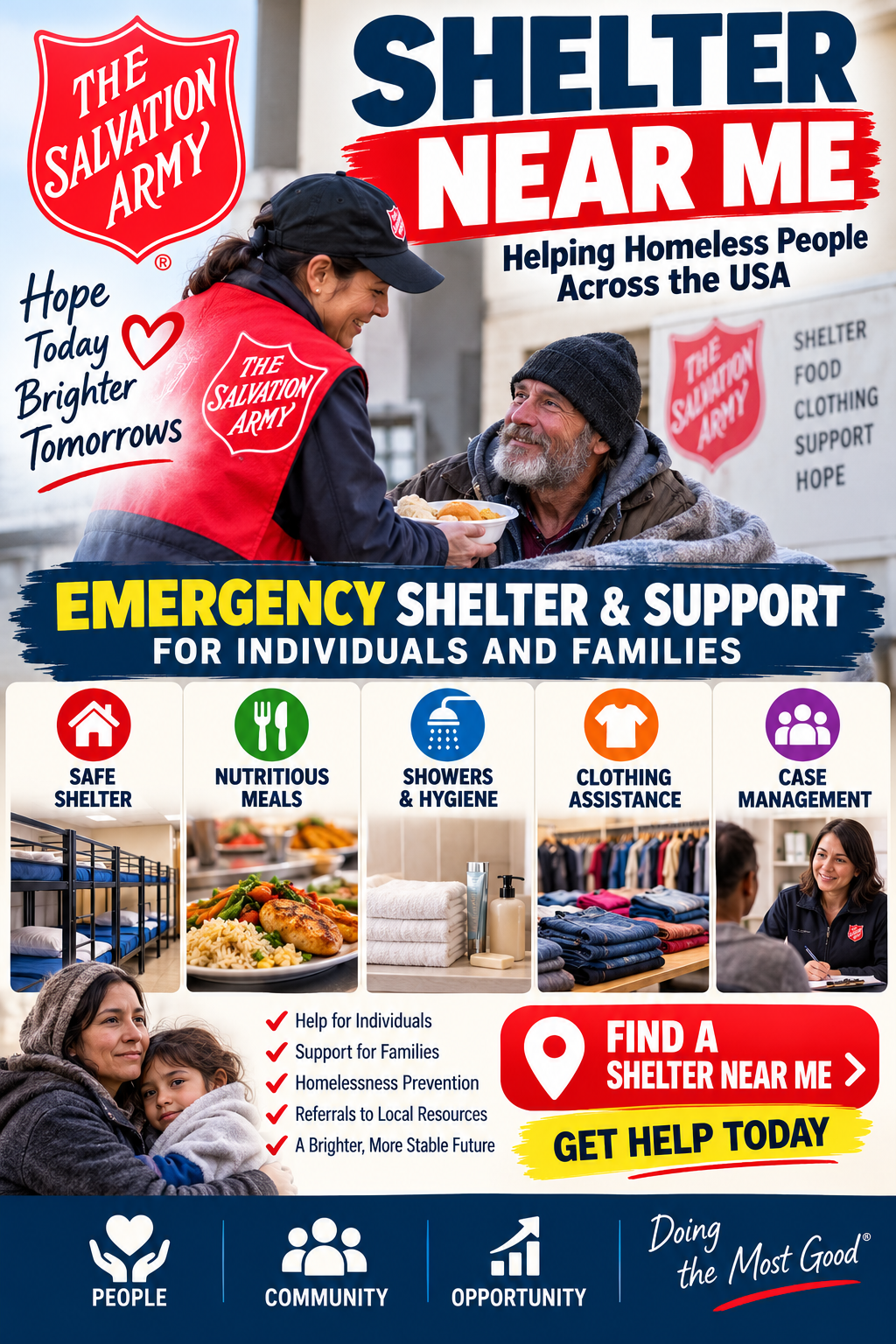
Finding a safe place to sleep can be difficult when you are experiencing homelessness, losing your housing, or facing a sudden financial emergency. If you are searching online for a Salvation Army shelter near me, you may be looking for emergency shelter, meals, temporary housing, or other support for yourself or a family member.
The Salvation Army operates homeless shelters and housing assistance programs in communities throughout the United States. Depending on the location, services may include overnight accommodation, food, showers, case management, referrals, and assistance with finding more stable housing.
This guide explains how to locate a nearby Salvation Army shelter, what types of help may be available, how to contact local staff, and what to do if you need a safe place to stay tonight.
What Is a Salvation Army Homeless Shelter?
The Salvation Army is a nonprofit organization that provides social services and emergency assistance to people experiencing financial hardship, homelessness, and other difficult circumstances.
Its local programs are designed to address immediate needs while helping people work toward greater stability. Some locations operate emergency shelters, while others provide transitional housing, homelessness prevention services, or referrals to partner organizations.
According to the organization’s official website, its emergency shelter programs can provide safe accommodation and connect people with additional services. The exact programs depend on the community and the facility.
You can start your search using the official Salvation Army Homeless Shelters directory.
How to Find a Salvation Army Shelter Near Me
If you need shelter for yourself, a friend, or a family member, follow these steps to locate assistance in your area.
1. Search by City or ZIP Code
Visit the official Salvation Army website and enter your city or five-digit ZIP code in the location search tool.
Look for services specifically related to homelessness, emergency shelters, housing assistance, or family services. Not every Salvation Army location operates a residential shelter, so check the service information carefully.
2. Call the Local Office
Contact the nearest Salvation Army service center before traveling there. Ask whether the location operates an emergency shelter and whether beds are currently available.
You can ask questions such as:
- Do you have emergency shelter available tonight?
- Do you accept single adults, couples, or families with children?
- Is advance registration required?
- What identification or documents should I bring?
- Are meals, showers, and basic supplies available?
- Can you refer me to another shelter if you are full?
Calling ahead can save time and help you identify the most appropriate service.
3. Contact 211 for Local Housing Resources
In many parts of the United States, dialing 211 connects people with local community assistance information. Depending on your area, operators may help you locate emergency shelters, food programs, rental assistance, and other services.
You can also visit 211.org to explore local resources.
If you cannot reach a Salvation Army shelter, ask 211 about other emergency accommodation options in your community.
Types of Help Available Through Salvation Army Programs
The services available vary by location, but several types of assistance may be offered.
Emergency Homeless Shelter
Emergency shelters provide temporary accommodation for people who do not have a safe place to sleep. Depending on the facility, support may include a bed, meals, showers, hygiene supplies, and referrals to community services.
Some shelters serve single adults, while others are designed for families, women, young adults, or specific populations.
Because space may be limited, contact the shelter to confirm availability and eligibility.
Transitional Housing
Transitional housing offers temporary accommodation for eligible people who need additional time and support to move toward permanent housing.
Programs may provide case management, budgeting guidance, employment resources, and help identifying longer-term housing options. Length of stay and participation requirements depend on the specific program.
Family Shelter Assistance
Families with children may be able to access emergency family shelters or housing programs through the Salvation Army or its community partners.
Some locations provide family-focused accommodation, while others refer families to specialized services.
When contacting a local office, explain how many people need accommodation and whether children, older adults, or anyone with accessibility needs will be staying.
Homelessness Prevention and Housing Support
You may not need to become homeless before asking for help. Some Salvation Army programs assist people who are at risk of losing their housing.
Depending on available funding and local eligibility rules, assistance may include referrals for rental support, utility assistance, financial counseling, or other resources intended to prevent housing loss.
Contact your local office as early as possible if you have received an eviction notice or cannot afford your next rent payment.
Food, Clothing, and Basic Necessities
Some Salvation Army community centers provide food assistance, clothing, hygiene supplies, or referrals to other local organizations.
These services may help people who are staying in temporary accommodation, living in a vehicle, or struggling to afford basic necessities.
Ask the local service center which programs are currently available and whether appointments or registration are required.
Who Can Qualify for Salvation Army Shelter Assistance?
Eligibility depends on the shelter, available space, and the program’s rules. People who may be eligible include:
- Individuals who do not have a safe place to sleep.
- Families experiencing homelessness or housing instability.
- Low-income individuals facing an immediate housing crisis.
- People displaced by a fire, disaster, eviction, or another emergency.
- Individuals seeking transitional housing or referrals to community support.
Some facilities have age restrictions, household requirements, or specialized admission criteria. Certain programs may also have rules about sobriety, safety, and participation in services.
Do not assume that you are ineligible simply because you are unemployed, have limited income, or lack permanent housing documents. Explain your circumstances to the local shelter and ask what options are available.
What Documents Should You Bring?
If possible, prepare the following information before contacting a shelter:
- Photo identification, if available.
- Names and ages of household members.
- Contact information for yourself or a trusted person.
- Any relevant benefit or income information.
- Medical or accessibility information that affects your accommodation needs.
- Eviction notices or other housing-related paperwork, if applicable.
Requirements vary, and some facilities may be able to advise you even if you do not have every document.
If you lack identification, tell the staff member when you call. Ask whether you can complete an initial assessment or receive a referral without it.
What If the Salvation Army Shelter Is Full?
Emergency shelters can experience high demand, particularly during severe weather or periods of economic hardship. If the nearest location cannot accommodate you, ask staff for referrals rather than giving up.
You can also:
- Call 211 for other nearby emergency shelters.
- Contact your local city or county homelessness services office.
- Search for family shelters or specialized accommodation if relevant.
- Ask about warming centers or cooling centers during extreme weather.
- Contact community organizations and local nonprofit housing providers.
If you are in immediate danger, call 911. If you are fleeing domestic violence, contact the National Domestic Violence Hotline at 800-799-7233 or visit thehotline.org for confidential support.
How to Help a Homeless Person Find Shelter
If you are helping someone who is homeless, approach them respectfully and ask what kind of assistance they need.
You can help them search for local Salvation Army services, call 211 together, or contact an emergency shelter to check its admission requirements.
If the person has children, mobility limitations, medical needs, or safety concerns, mention these factors when requesting referrals. They may need a specialized facility rather than a general overnight shelter.
Avoid promising that a bed or financial assistance will be available until the provider confirms it.
Frequently Asked Questions
Does the Salvation Army provide free homeless shelter?
Some Salvation Army shelters provide accommodation without charging eligible residents, but policies vary by facility and program. Contact your local shelter to ask about costs, eligibility, and availability.
Can I get Salvation Army shelter assistance tonight?
Possibly. Emergency services depend on the location, available beds, operating hours, and admission requirements. Call the shelter directly or contact 211 to locate current options.
Does the Salvation Army help homeless families with children?
Some locations operate family shelters or provide referrals to appropriate housing programs. Availability and eligibility vary, so explain your family’s needs when contacting the local office.
Can I get help if I am about to become homeless?
Yes, it is worth contacting the Salvation Army before losing your housing. Some local programs offer homelessness prevention assistance or referrals for rent, utilities, and other emergency resources.
Is there a Salvation Army shelter in every city?
The Salvation Army serves communities across the country, but not every location operates a homeless shelter. Some offices focus on food assistance, financial support, or referrals to partner agencies.
Final Thoughts
Searching for a Salvation Army shelter near me is an important first step toward finding safety and support during a housing crisis. Depending on your location, the organization may offer emergency shelter, transitional housing, meals, basic necessities, or referrals to other community resources.
Start with the official Salvation Army shelter directory and enter your city or ZIP code. Call the local office to ask about current availability and requirements. If you need immediate assistance and cannot find an open bed, contact 211 for additional local resources.
Help may be available even if your situation is complicated or you do not have all your paperwork. Reaching out to local services can help you identify the next practical step toward safe accommodation and more stable housing.
Suggested Post: Salvation Army Shelter Near Me: Emergency Homeless Help in the USA
Looking for a Salvation Army shelter near me? Learn how to find emergency shelter, food, family housing, and homeless assistance across the USA.
Book Here Salvation Army shelter near me
Related keywords: Salvation Army homeless assistance, emergency homeless shelter near me, free shelter for homeless people, Salvation Army housing assistance, emergency shelter for families, and 211 homeless assistance.